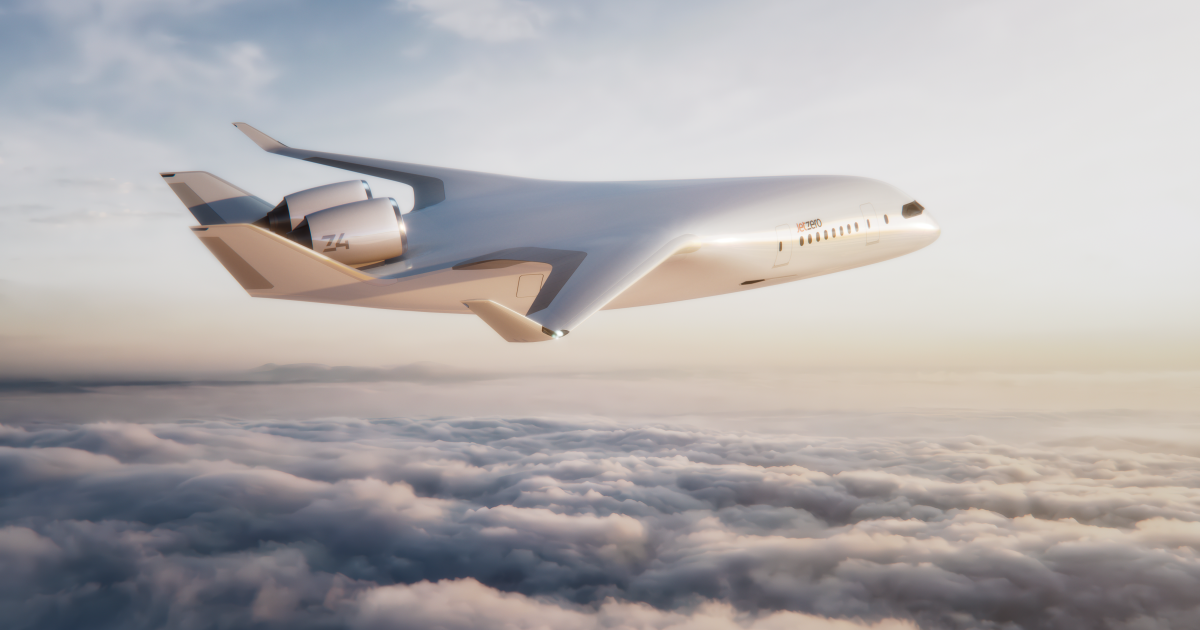
The FAA has awarded JetZero $5.3 million to study airflow through its top-mounted engines in flight, the company announced on Wednesday. Long Beach, California-based JetZero will collect the data on Jet1, the full-scale demonstrator for its blended-wing-body Z4 airliner.
Funding comes from Phase IV of the agency’s Continuous Lower Energy, Emissions, and Noise (CLEEN) program. According to JetZero, the money will pay for sensors on Jet1’s engines and nacelles.
Those sensors will measure airflow at each engine’s inlet and just behind its fan. JetZero will collect the data during takeoff, climb, cruise, and ground operations in crosswinds. Gathering the data on a full-scale airplane in flight is cheaper and more realistic than relying on engine test rigs or ground simulations, the company said.
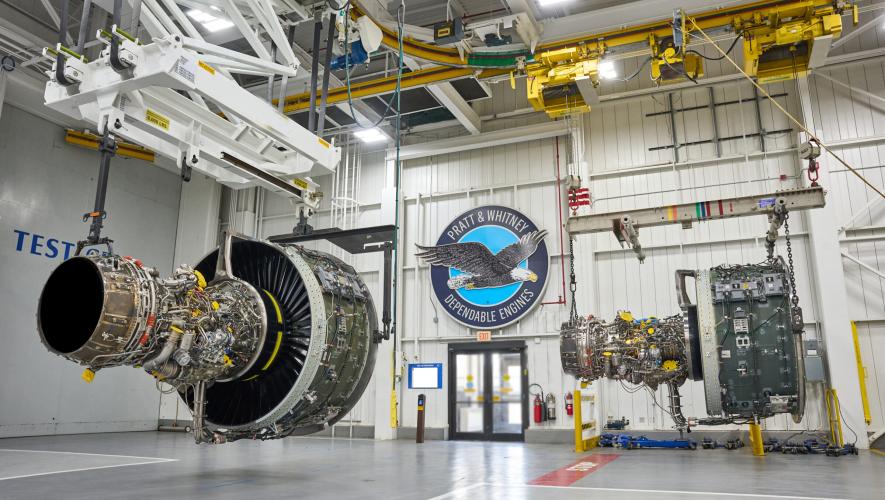
Jet1 will fly on a pair of Pratt & Whitney PW2040 turbofans, the same model that powers some Boeing 757s. JetZero has not yet named an engine supplier for the production Z4.
The FAA launched CLEEN Phase IV in September, signing two-year, cost-shared research agreements with JetZero, Boeing, GE Aerospace, Heart Aerospace, and Honeywell Aerospace. It hasn’t disclosed agreement values, though its January draft solicitation anticipated up to $25 million for all of Phase IV. That is a fraction of the $100 million or more the FAA put into each of the program’s three earlier five-year phases.
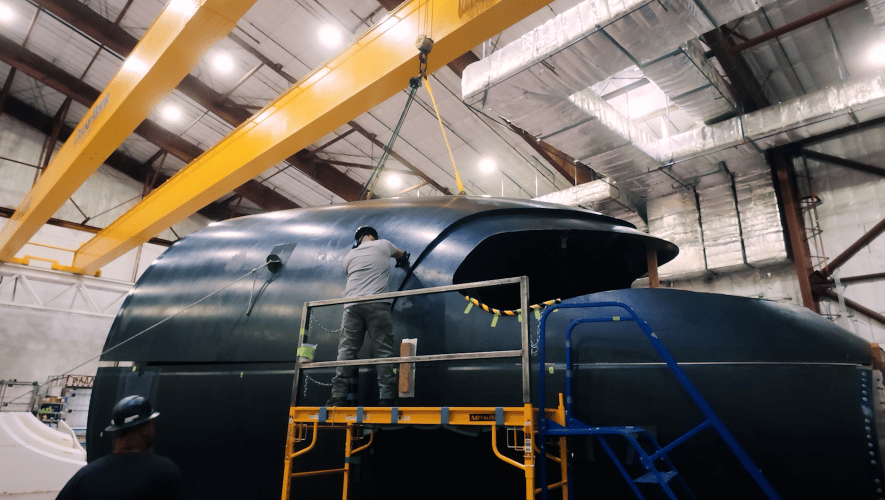
Jet1 Takes Shape
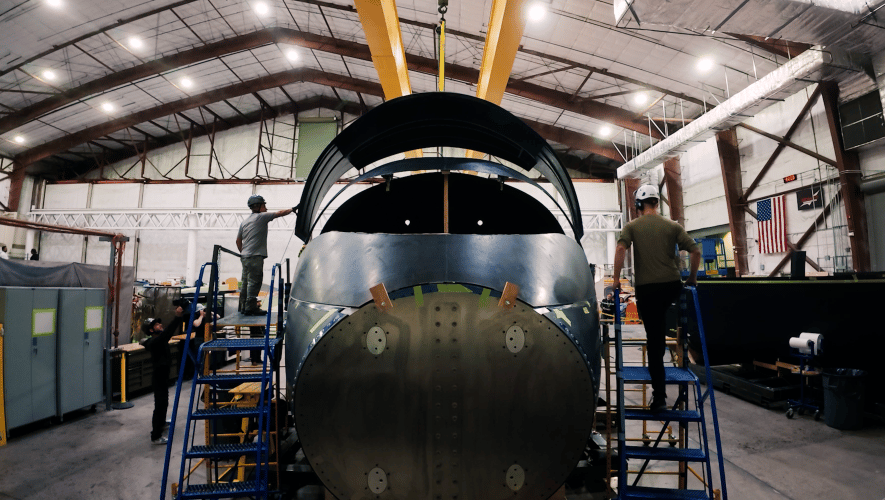
Northrop Grumman subsidiary Scaled Composites is assembling Jet1 at the Mojave Air & Space Port (KMHV) in California. JetZero said in August that the demonstrator was 40% complete as of June, with first flight planned for the fourth quarter of 2027.
Mounting the engines above the airframe will cut noise for communities near airports, JetZero said. In a blended-wing-body design like the Z4, the wings and fuselage merge into a single shape that produces lift across its entire span.
The 250-seat Z4 would fly up to 5,000 nm, filling a niche between single-aisle and widebody jets that is known as the middle of the market. JetZero is pitching it as an alternative to Airbus and Boeing jets and says it will be up to 50% more fuel-efficient than comparable tube-and-wing airliners with the same engine technology. It aims to put the Z4 into service in the early 2030s.
JetZero broke ground on its Z4 factory in June at Piedmont Triad International Airport (KGSO) in Greensboro, North Carolina. It plans to move its headquarters to a renovated building on the campus in early 2027. In July, the company also said it would open an engineering office at Wichita State University’s National Institute for Aviation Research in Kansas to work on advanced materials, digital engineering, and certification testing.
After raising more than $1 billion by January, JetZero closed a loan of up to $100 million in August to help pay for Jet1 and the Greensboro buildout. It also signed a nonbinding letter of interest in July with the Export-Import Bank of the United States to explore up to $3 billion in financing for the campus.
United Airlines’ conditional agreement to buy up to 100 Z4s, with options for 100 more, depends partly on Jet1 flying in 2027. Delta Air Lines, which partnered with JetZero in 2025, is advising on operations and cabin design through its Sustainable Skies Lab. At the Farnborough International Airshow in July, Bahrain’s flag carrier Gulf Air signed a letter of intent for an undisclosed number of Z4s. Japan Airlines also agreed to help shape the airplane’s specifications, ground handling, and maintenance plans.
In this article
More In Engines