Dassault Aviation has shelved work on hydrogen propulsion systems for its Falcon business jets. Speaking on a French radio broadcast on Sunday, the group’s chairman and CEO Éric Trappier said switching from jet fuel is not practical for its long-range aircraft, saying the company will instead prioritize adoption of sustainable aviation fuel (SAF).
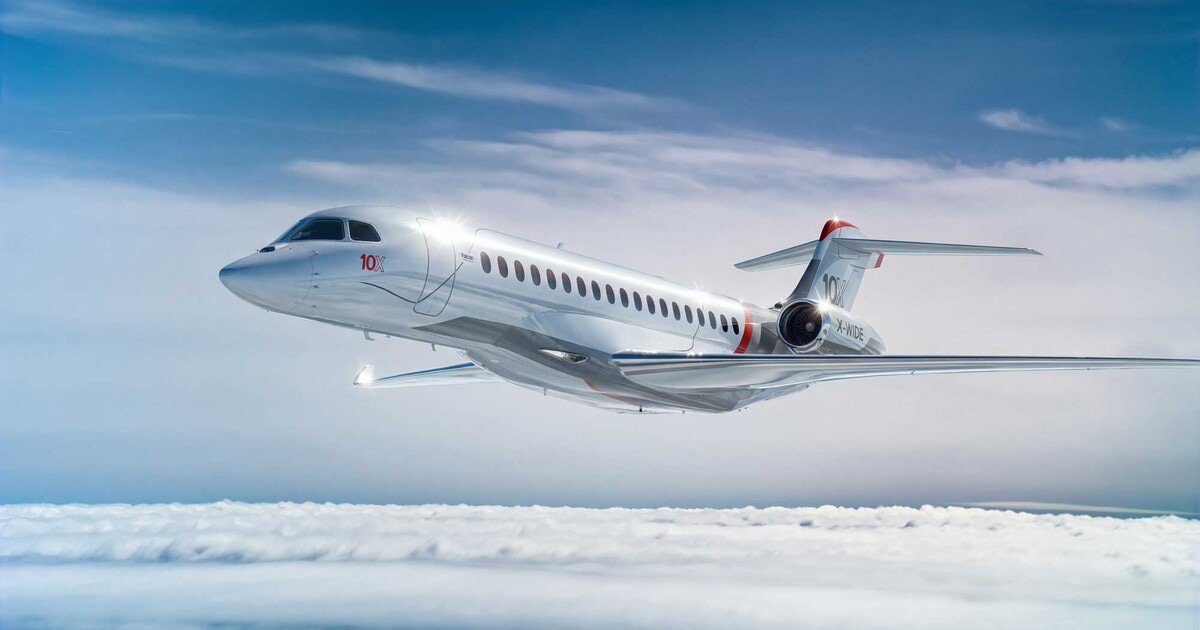
On Tuesday at EBAA Week, Carlos Brana, Dassault’s executive v-p for civil aircraft, confirmed the decision. He told AIN that hydrogen adoption is not a priority and that the company’s main focus now is completing type certification of its new Falcon 10X flagship, for which projected service entry is now 2029.
According to Brana, future use cases for hydrogen power in aviation hinge on compressing the liquid fuel into tanks that can be accommodated in the airframe and dealing with challenges of cryogenic cooling as an alternative to compressed gas. He pointed out that some engine manufacturers are working on concepts for dual-mode powertrains that could switch between hydrogen and jet-A.
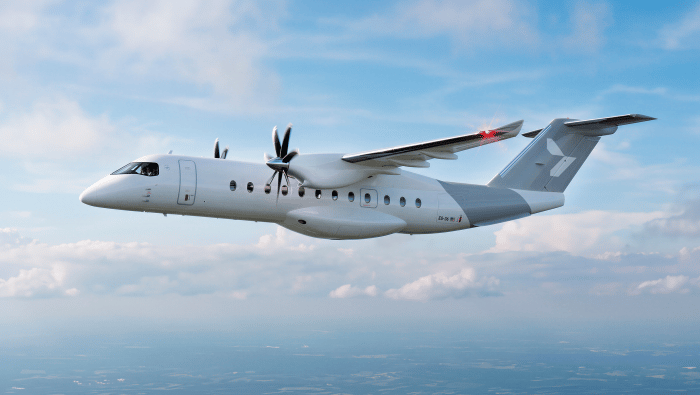
But Beyond Aero CEO Eloa Guillotin, who sat on the same panel with Brana at EBAA’s European Business Aviation Summit, said she has found business aircraft operators ready to embrace the French start-up’s eight-passenger hydrogen-electric aircraft. Guillotin believes that hydrogen is a more credible path to decarbonization than SAF, which she charged is being pushed mainly as a political response to the challenge.
The Toulouse-based company is telling prospective buyers its BYA-1 aircraft will deliver a 60% reduction in direct operating costs, mainly on the basis of significantly reduced maintenance requirements. Beyond Aero head of sales Benjamin Le Drogo told AIN that the aircraft will be entirely electric with no hydraulic systems and engines that never exceed 85-degrees C and so avoid the need for hot section inspections and major overhauls.
Guillotin and her team are at EBAA Week to engage with larger operators now planning their long-term fleet renewal options. She said that around half of her sales prospects are motivated more directly by the prospect of cutting operating costs than reducing their carbon footprint. Other potential buyers are younger entrepreneurs more motivated by a green agenda and access to cutting-edge technology.
Against a backdrop of geopolitical conflict that has spiked fuel prices and squeezed margins for aircraft operators, Guillotin argued there is a “national sovereignty” motive for switching to hydrogen. “It can be produced in your own country here in Europe, and perhaps even at the airports you operate from,” she explained.
Brana echoed the urgent need for Europe to reclaim the initiative in aviation technology and business leadership, suggesting that inconsistency in political priorities is impeding progress with key objectives.
“Sometimes, politicians are saying that going green is the priority and then they say it is being more competitive,” he noted. “When we are always changing the target we are pursuing, we never get there. If we want to be competitive, we need to be quick and stick to our purpose. Let’s have a target and pursue it.”
More In Engines