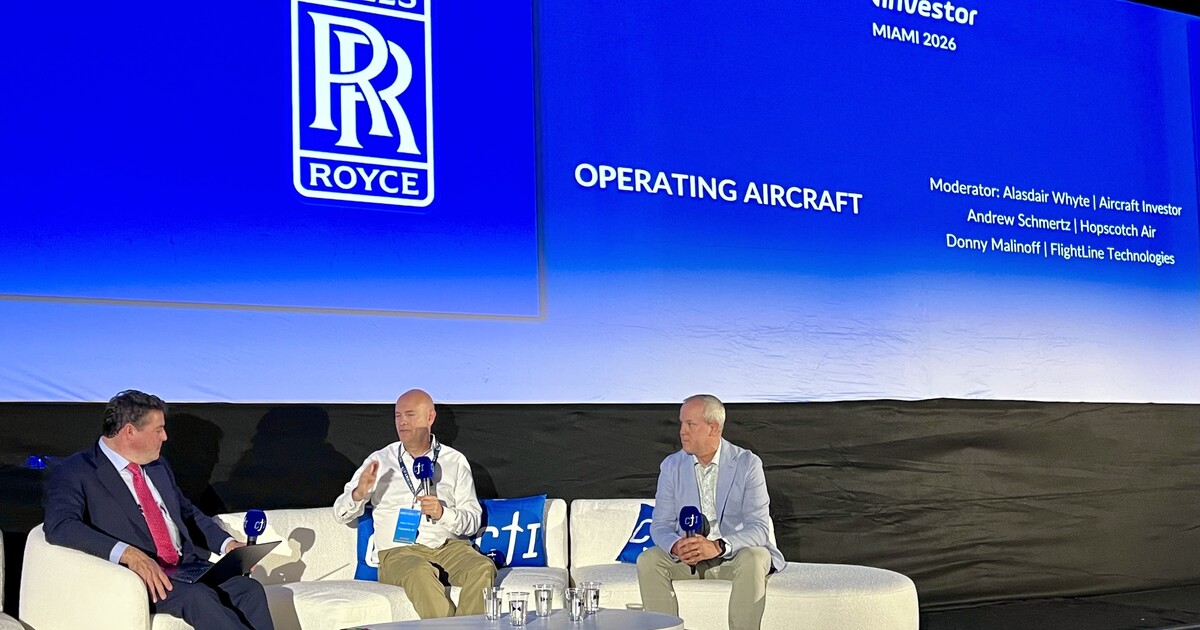
Access to capital and aircraft, not customer demand, is the primary constraint on small-aircraft operators serving the regional private aviation market, according to Andrew Schmertz of Part 135 operator Hopscotch Air and Donny Malinoff of co-ownership provider FlightLine Technologies. Both spoke yesterday during an “Operating Aircraft” panel at Corporate Jet Investor (CJI) Miami 2026.
Schmertz said the air charter market has been “flat for decades,” apart from a temporary surge during the pandemic, but he described regional air mobility as “a blue ocean.” Most travel in the U.S. consists of trips under two hours, he noted, and in Hopscotch’s most recent research, half of its new customers had never flown privately.
Hopscotch, which operates a fleet of Cirrus SR22 piston singles, quotes a single all-inclusive price and has never added charges after a booking. “We believe in frictionless customer service. Get a price, that’s the price,” Schmertz said.
Asked to rank his biggest challenges, Schmertz cited access to capital first, saying banks “have been turned off aviation lending.” He also listed aircraft acquisition as a challenge.
Schmertz, who noted that nearly every Cirrus owner is a pilot, expressed concerns about the nationwide pilot shortage, though he said Hopscotch has made progress on hiring. The company operates eight aircraft and aims to have 10 by the second quarter.
Malinoff said demand for FlightLine’s SR22 co-ownership program is strong, but added that “the challenge is getting airplanes, and getting airplanes at [the right] price.”
Maintenance and Seasonality
Hopscotch’s entire fleet is under warranty, which Schmertz said helps offset rising maintenance costs. However, warranty work must be performed at Cirrus service centers, and those facilities need to meet certain standards to work on Part 135 aircraft. In fact, one Hopscotch SR22 has been grounded for three months while the company works to resolve a power issue.
Malinoff urged operators to vertically integrate maintenance as quickly as possible. FlightLine purchases only new aircraft to keep costs predictable, he added.
Seasonality also weighs on Hopscotch. Schmertz said summer demand could support 100 Cirrus aircraft flying daily between New York and Boston, while the winter season in the U.S. is slower. The company is expanding south in the coming months to offset the downturn. It routinely flies as far as Virginia and Pittsburgh, though Schmertz said pricing becomes less competitive on longer trips, such as those to Chicago.
FlightLine currently operates SR22 but plans to add a turboprop single and later a light jet. Each aircraft has five members, and the company offers a fair-market-value buyback after five years.
Malinoff said that because FlightLine’s customers fly themselves, the company’s focus is pilot proficiency rather than recruitment. It is developing technology that gives members continuous feedback on how they operate the aircraft.
Both executives said Cirrus safety systems have eased passenger concerns about single-engine aircraft. Malinoff said the airframe parachute and Autoland system persuade hesitant passengers to fly, while Schmertz said the SR22 is “such a capable aircraft for us that it has changed that conversation about twins.”
More In Aircraft