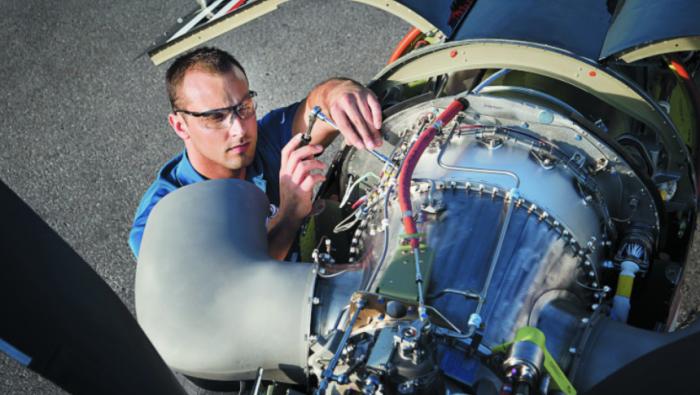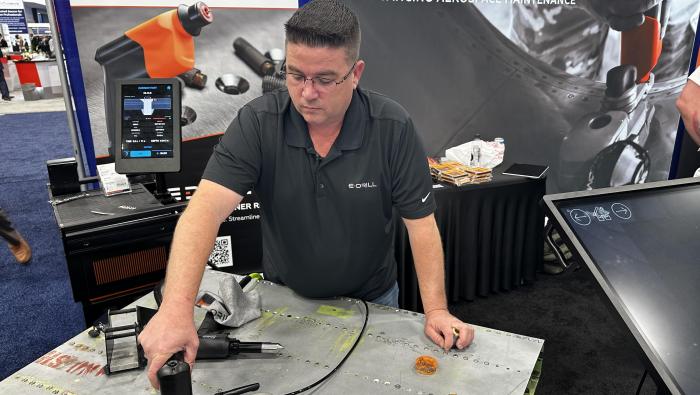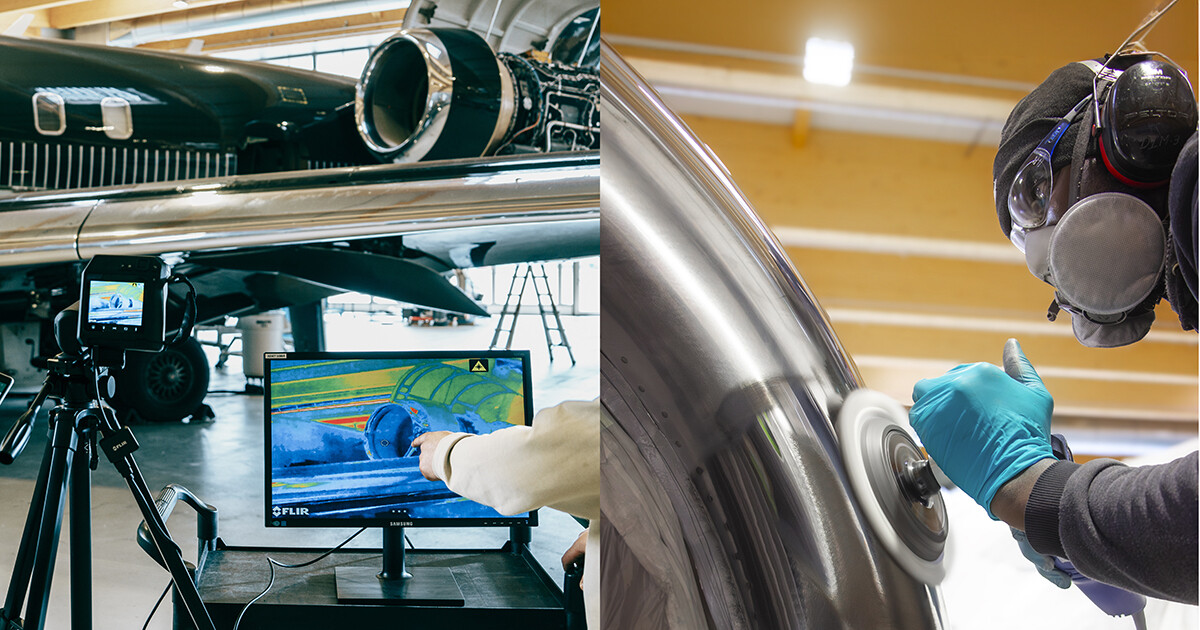
AMAC Aerospace has invested in technologies to help aircraft owners identify the onset of corrosion at an early stage and deal with the value-depleting problem effectively. Its maintenance, repair, and overhaul (MRO) teams are now equipped with an array of modern nondestructive test (NDT) equipment to conduct processes, including eddy current, ultrasonic, phased array ultrasonic, infrared thermography, 3D laser scanning, and X-rays.
According to AMAC’s specialists, aircraft operating environment is a better indicator of corrosion risk than age. The damage, which mainly affects metal parts but can also degrade fiber composites, is more prevalent when aircraft are based near saltwater shorelines, in environments that are humid, or have high levels of pollution from heavy industry.
The close proximity of dissimilar metals or materials can also significantly increase the occurrence of corrosion. While aircraft manufacturers establish a separation or barrier between materials at the design phase, the risk cannot be completely eliminated, raising the importance of conducting NDT assessments, as well as visual inspections because this can reveal hidden corrosion.
AMAC, which has its main MRO facility in Basel, Switzerland, is part of a changing approach to corrosion control that is moving from periodic visual inspections and manual treatment toward a preventative approach based on early detection, better surface protection, and data-driven predictive maintenance. Preventative measures now include using surface primer paints and topcoats, corrosion inhibitors, better drainage control around the airframe, and the use of surface treatments, sealants, and chemical conversion coatings.
AI, 3D Lasers, and Robots
The AMAC inspectors are now using digital imaging based on artificial intelligence that more accurately compares current inspections with previous images of the airframe surface. Over and above the standard single-probe eddy current tests, the company is increasingly deploying “arrays” that can cover larger areas and map potential issues accurately.
More accurate and faster detection of corrosion issues is also being achieved with 3D laser scanning inspections. In the future, AMAC said it expects to make increasing use of robotic-based inspections.
According to AMAC, corrosion is just one of several factors it helps aircraft owners focus on in a bid to preserve the value of their assets. It endeavors to combine the checks and MRO tasks required by regulators and manufacturers with optional improvements to protect the aircraft’s appearance and resilience, such as restoring the condition of exterior surfaces and early repairs to cracks, defects, and abnormalities in engine or APU performance.
“Our experienced technicians never only look at the work task requested by the scheduled inspection card; they always look around in the area where they work and at the whole aircraft in general,” an AMAC spokesperson explained to AIN. “We often have had the case of an aircraft coming in for a certain inspection task that needed to be performed, and our engineers found defects in an area that was not part of the scheduled inspection.”
The group, which also has facilities in Turkey and France, has reported strong demand for supporting BBJ operators in recent months. AMAC’s MRO teams are also equipped to work on ACJ bizliners, as well as a wide variety of types including various Bombardier Global, Gulfstream, and Dassault Falcon models.
In this article
More In Maintenance and Modifications